Where the Case Resonates
The same switch can sound composed in one keyboard and unexpectedly lively in another. The case is not a passive shell: its material, geometry, mounting and internal space shape how energy travels and where it lingers.
Construction is a chain of decisions
Plate: support and flex
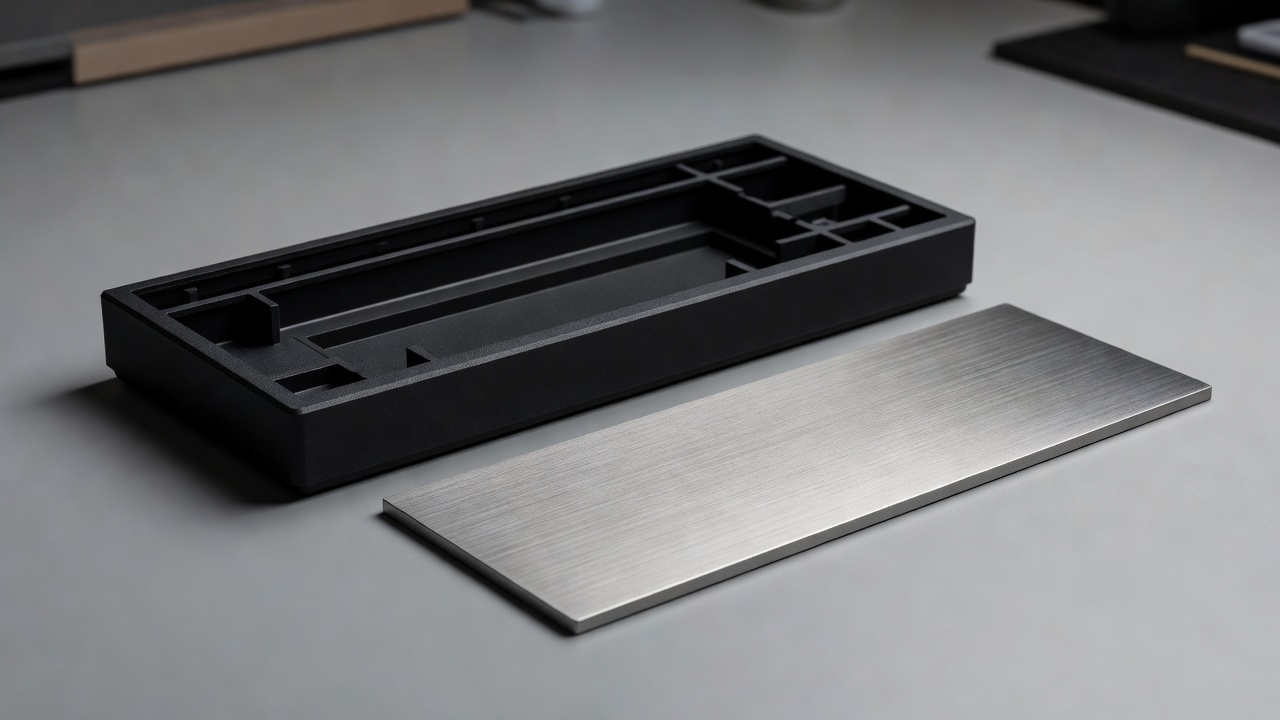
The plate holds switches and can transmit their impact into the rest of the keyboard. A stiffer plate can feel more direct; a more flexible arrangement may produce a softer impression. Material, thickness, cutouts and mounting points alter the response together.
Case: volume and reflection
A case encloses air and presents surfaces for vibration and reflection. Its shape, wall thickness, internal cavities and fit can affect the perceived body of a note. A hollow or ringing sound can point to an energetic cavity, loose contact or an assembly that needs inspection.
Mount: the connection between parts
Tray, top, gasket and other mounting styles constrain the plate in different ways. A mount can change how impact energy reaches the case, how much the plate flexes and how consistently the board responds across its layout.
Think in terms of a vibration path: keycap to stem, switch to plate, plate to mount, and mount to case. The desk and mat continue that path. A board that sounds lively on a hard tabletop may become calmer on a desk mat, even though no internal part changed.
Diagnose before modifying
Listen for where the sound seems to originate. A high, narrow ping may suggest a spring or a part vibrating freely. A broad hollow note may suggest the enclosure or cavity. Uneven rattles often warrant checking stabilizers, screws, switch seating and keycap fit before adding material. Change one condition, then listen again.