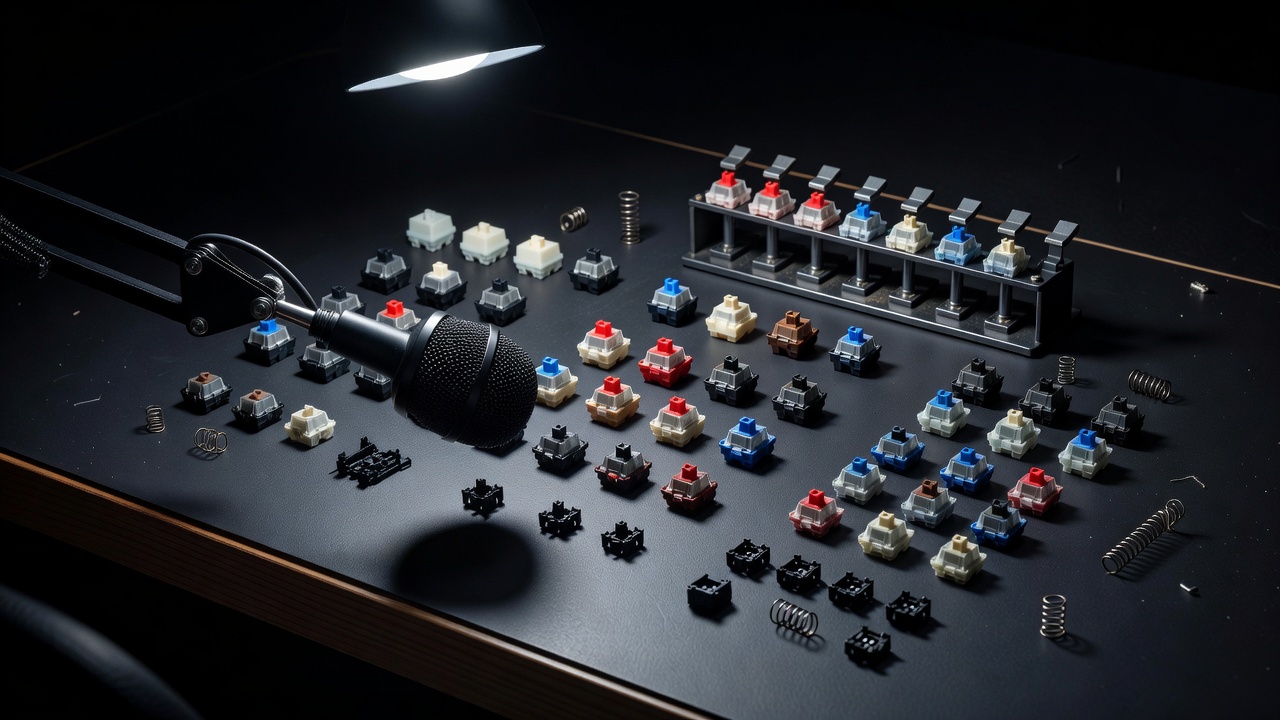
The Character of a Keystroke
Before you call a switch quiet, loud, creamy or sharp, notice where its sound begins. A switch is a small moving mechanism: a stem travels, contacts meet, a spring returns it, and the housing shapes the edges of that motion.
Read the movement, hear the note
Linear: uninterrupted travel
With no designed tactile bump, a linear switch moves smoothly through its stroke. Its audible character often comes from the stem meeting the bottom housing and the return at the top. A firm bottom-out can sound pronounced even when the travel itself is quiet.
Tactile: a distinct change in force
A tactile mechanism adds a bump that can be felt and sometimes heard as the stem passes the leaf. The shape, position and sharpness of that bump matter. A rounded event may blend into a typing rhythm; a crisp one can stand out between the travel and impact.
Clicky: a designed sound event
Click mechanisms intentionally create an audible signal, often through a click jacket or bar. Their sound is more conspicuous by design, but pitch and harshness still depend on the individual design, keycap, plate and room.
What makes a switch sound different?
Stem and housing materials, internal clearances, spring behavior and factory lubrication all influence friction and contact. A stem can create a crisp tick against one housing and a more rounded note in another. Springs can add a faint ping if they vibrate; careful assembly and lubrication may reduce friction or unwanted noise, but too much lubricant can dull motion or interfere with a tactile feel.
Keycap mass and shape are part of the listening chain, too. A larger cap changes the vibrating surface and can emphasize a different pitch than a short modifier. Keep the cap and test key consistent when comparing switches.